



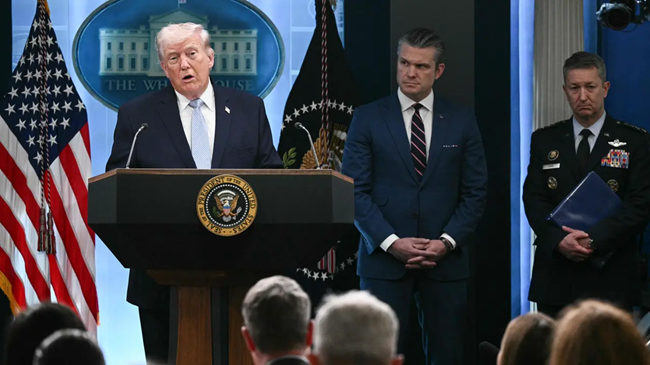
The war in Iran has reached a turning point. Today marks the deadline of one of President Trump's many ultimatums, in which he has threatened Tehran with destruction should no agreement be reached.
In practice, Iran would be required to accept a substantial surrender and reopen the Strait of Hormuz, in exchange for a (temporary) end to the strikes and a vague promise of sanctions relief. The problem is that Iran does not trust Trump and, on the ground, is - against all odds - holding against the Israeli-US steamroller. For this reason, Tehran is seeking a permanent end to the war, firm guarantees against further attacks, and funding to finance its reconstruction. In short, the 2 sides remain far apart.
Over these 40 days of war, the US and Israeli forces have struck primarily the regime's military and security infrastructure, as well as the industrial fabric directly or indirectly linked to weapons production, leaving largely intact the industrial infrastructure tied to hydrocarbons and energy. The Israeli forces have been pressing for strikes on the latter for days, and there is a real risk that, should the ultimatum expire, Washington may decide to play that card — a move that could be accompanied by a series of ground raids on selected targets: the islands in the Strait of Hormuz and Kharg Island, coastal and port areas (Bandar Abbas), and, deeper inside Iranian territory, the missile cities. An escalation that, however, could drive up even further the already steep cost of this war.
The Iranian forces, for their part, have bet everything on geography and strategic depth, and on the redundancy of their military infrastructure — a posture that has allowed Tehran to maintain a low-intensity attrition capability with which to keep Israel under pressure and strike strategic infrastructure in neighbouring Arab countries. Most recently, overnight, the SABIC petrochemical complex in the industrial city of Al Jubail, Saudi Arabia, came under attack. Iran has clearly staked its strategy on raising the overall cost of the war, with the ultimate aim of shaping American decision-making, while simultaneously counting on its ability to keep the home front cohesive.
Now, however, as noted, we have reached a turning point — a dangerous zero-sum game in which the room for compromise is vanishingly narrow.




Privacy Policy

Powered by © Mobilbyte s.a.s. Information Technology