



The situation in the Strait of Hormuz remains deadlocked.
President Trump announced, with his customary fanfare, the launch of an operation named FREEDOM, aimed at escorting traffic through Hormuz. In reality, according to sources cited by the Wall Street Journal, the operation would consist "simply" of ensuring coordination with ships, countries, and insurance companies in order to stay "updated" on the best and safest lanes for transiting the Strait.
A sort of "hybrid" approach, in essence, whereby there would be no actual escort, but only intervention should hostile Iranian vessels or aircraft attempt to interfere with and obstruct transits. And already last night, a cargo vessel was attacked 78 nautical miles north of the Emirati port of Fujairah.
All this while the American blockade against Iranian ports continues - albeit with some gaps - and traffic through Hormuz remains light years away from returning to pre-war levels, with serious repercussions for global economic stability: oil prices remain well above $100 per barrel, prices are rising across the board - from foodstuffs to aluminium and industrial plastics - and a severe crisis is about to hit aviation transport as well, struggling with difficulties in jet fuel supply. Just over 40% of jet fuel imported by Europe passes through Hormuz, while refining capacity on the continent has been significantly scaled back in recent years, partly due to the ill-conceived "green deal" of the European Commission. A partial exception is Spain, which, with 8 refineries, is today a net exporter of aviation fuel.
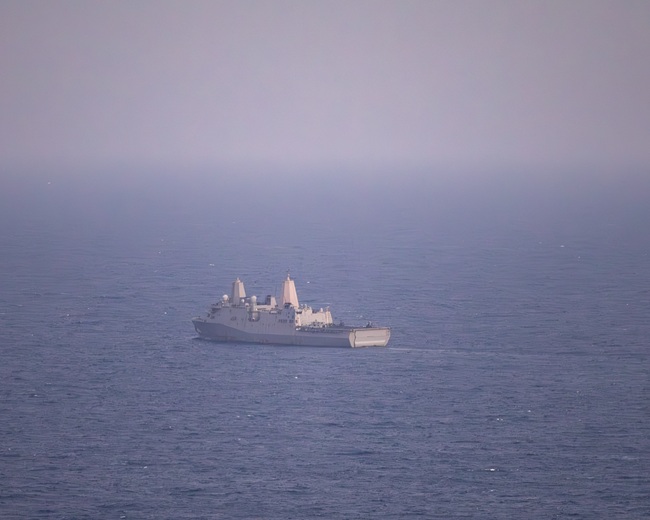
(Photo: LPD USS NEW ORLEANS underway in the Arabian Sea during the US blockade against Iranian ports)



Privacy Policy

Powered by © Mobilbyte s.a.s. Information Technology