



Yesterday, the ceasefire between Iran and the United States - relatively stable since the 8 April truce - entered a phase of extreme fragility.
The trigger was President Trump's announcement of the launch of Operation PROJECT FREEDOM - aimed at escorting naval traffic through the Strait of Hormuz, and still surrounded by considerable confusion - following which 2 ARLEIGH BURKE-class guided missile destroyers, USS TRUXTUN and USS MASON, transited the Strait successfully escorting 2 merchant vessels flying the US flag.
Shortly afterwards, Tehran declared it had struck a US vessel - in all likelihood the USS CANBERRA, an INDEPENDENCE-class LCS - near Bandar-e Jask with 2 KHALIJ FARS anti-ship ballistic missiles: according to the Iranian account, the vessel had ignored repeated warnings before the attack, while CENTCOM officially denied the incident.
In parallel, during yesterday afternoon, Iran conducted a series of attacks against commercial shipping: 2 SHAHED-136 UAVs struck the Emirati ADNOC tanker BARAKAH off the coast of Oman, and subsequently several drones attacked the South Korean cargo vessel NAMU while anchored off the UAE port of Umm Al Quwain. Tehran then struck the Emirati port of Fujairah with UAVs - the only UAE port equipped to receive oil tankers that faces the Gulf of Oman rather than the Persian Gulf - triggering a violent fire.
Iran then launched 3 separate waves of missiles and drones against the United Arab Emirates: according to the Abu Dhabi Ministry of Defence, air defences intercepted 12 ballistic missiles, 3 cruise missiles, and 4 UAVs. Dubai International Airport was temporarily closed and Bahrain declared a state of emergency.
Emirati MIRAGE 2000 fighters subsequently conducted strikes in the Bushehr and Shiraz areas of Iran, with Iranian air defence activity reported.
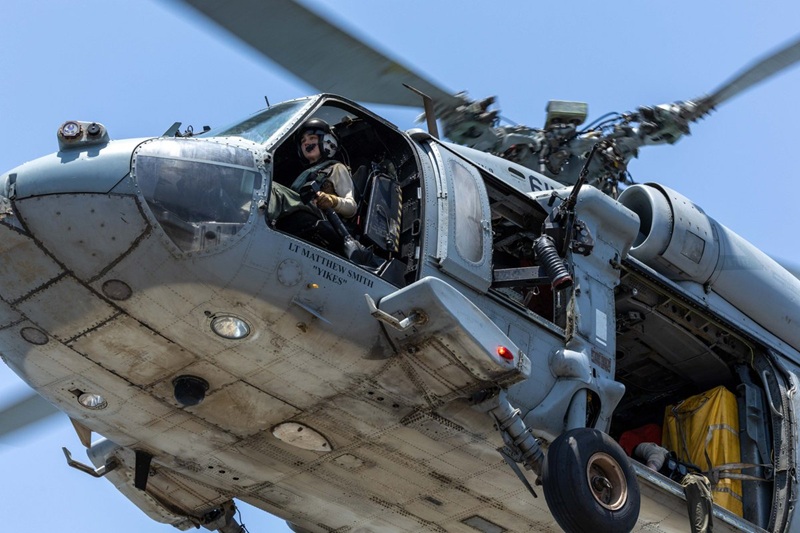
In the evening, US Army AH-64 APACHE helicopters and US Navy MH-60 SEA HAWK helicopters, operating from the Emirati base of Al Dhafra, sank 6 IRGC Navy missile boats in the Persian Gulf and the Strait of Hormuz. Additionally, dozens of American tanker aircraft - KC-135 STRATOTANKER and KC-46 PEGASUS - operated over Middle Eastern skies from Prince Sultan air base and Ben Gurion Airport in Tel Aviv.
Despite the situation having partially stabilised in recent hours, all indications point to the conclusion that we are now on the brink of a return to war and high-intensity military operations: negotiations are at a complete standstill, the Hormuz question is far from resolved, and the escalation threshold has dropped significantly compared to preceding weeks.
In the meantime, the US continues to reinforce its naval and air assets in the Middle East: the carrier BUSH has arrived in the Arabian Sea - replacing the FORD, which has left the Red Sea bound for Naval Station Norfolk in Virginia - joining the LINCOLN and LHA TRIPOLI with the 31st MEU already on station. A pressure signal directed at Tehran over the negotiations, but also a clear indication that Washington is keeping itself ready for the eventuality of a return to open conflict.




Privacy Policy

Powered by © Mobilbyte s.a.s. Information Technology