



Talks on Iran continue, but the sticking points remain. A trip to Tehran by General Asim Munir, the "ruler of Pakistan," was on the agenda for today, but according to some sources it has been cancelled.
The gap between Iran and the United States is still too wide — particularly on the nuclear file and the transfer of uranium abroad, and on control of the Strait of Hormuz. In recent days, several reports have surfaced of alleged tensions between Washington and Tel Aviv, with Netanyahu impatient to strike Iran again and Trump exercising caution, reportedly playing for time in an effort to cut a deal with Tehran.
In reality, the sense is that this could also be misdirection — a way to mask the true intentions of the United States and Israel, and to engineer the surprise effect of a fresh wave of strikes, this time meant to be conclusive and decisive. A weekend of extreme tension, then, lies ahead.
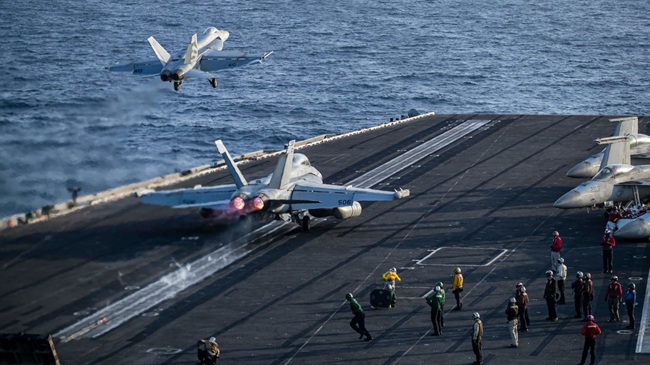
On the ground, in the meantime, the situation has not shifted: the U.S. air-naval posture has not been scaled back. On the contrary, dozens upon dozens of cargo flights have ferried equipment and weaponry into the area of operations over recent weeks. The war has been costly and has put arsenals under severe strain: in the first 16 days of fighting alone, more than 25% of the TOMAHAWK stockpile and 40% of the TALON interceptors for the THAAD batteries were expended. According to a recent Congressional Research Center report, one month of war has cost $30 billion, while 42 aircraft (planes, helicopters, and drones) have been lost or damaged, with a combined value of $2.6 billion (and the real figures are in fact higher).
Iran, for its part, has retained a degree of attrition capability, and during these weeks of ceasefire it is reported to have brought several underground missile cities back online. Under these conditions, a new phase of the war cannot drag on for long — it must, precisely, be decisive. The alternative is to accept this state of uncertainty indefinitely: a "cold war" fought on the economic and cognitive plane. Control of Hormuz remains contested, with traffic still far from normal flow levels, and the U.S. blockade on Iranian ports, launched on 13 April, still in place. Trump's bet is that the combination of sanctions, blockade, and military pressure will eventually erode Tehran's negotiating position and force it to fold.
The blockade in particular is wearing down Iran's already battered economy. Onshore storage is filling up — capacity is now close to 70% — and this has pushed Tehran to convert old tankers into floating storage platforms. To date, at least fifty Iranian tankers are being used for storage, 65% more than at the start of the blockade.
Trump is banking on this, but the risk is high — because this state of "war that isn't a war" carries enormous consequences for global economic and financial stability, and, ultimately, for the wallets of ordinary Americans as well.




Privacy Policy

Powered by © Mobilbyte s.a.s. Information Technology