



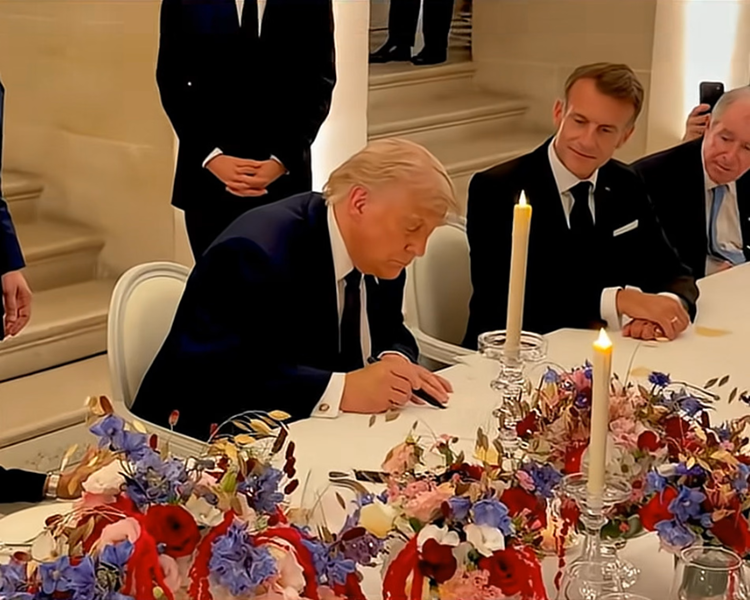
The agreement between the United States and Iran has been signed, ending the war for now and opening the way to the 2 months of negotiations that will have to seal the whole thing with a final understanding.
The agreement first of all certifies the situation on the ground: Iran has held, despite the serious damage suffered, and has imposed a direct and indirect cost on its counterparts that proved significant in the end and unmanageable, except at the price of further cost. In practice, and this is the paradox, Tehran comes out of the test militarily defeated - it no longer has a Navy, nor an Air Force, and its national military industry is wrecked - but its deterrent emerges strengthened, thanks to residual friction and the formidable Hormuz card.
The agreement therefore provides for the reopening of Hormuz and - and this is one of the most relevant points in Tehran's favor - it recognizes Iran's ability to "define the future administration and maritime services in the Strait of Hormuz," together with Oman and "in discussion with other coastal countries." The other points in Tehran's favor concern the commitment by the United States and "regional partners" to establish a $300 billion fund for the reconstruction of Iran, and Washington's commitment to ending every type of sanction against the country, according to a calendar to be agreed in the final agreement, and to unfreezing Iranian assets frozen under "procedures agreed during the 60 days of negotiations."
In exchange, Tehran undertakes not to develop or acquire nuclear weapons, while the question of uranium enrichment is referred to the final agreement, although the principle of lowering the critical enrichment threshold and of "dilution" is recognized, through a process to be carried out in country under IAEA supervision.
Overall, this is an agreement that contains many commitments, which will have to be made concrete in the next 2 months and consolidated in the final agreement, and that leaves open a series of questions that may not even reach a solution. The final judgment, therefore, can be issued only in 2 months' time.
What is certain, however, is that the agreement seals the resilience of Tehran and its regime - in essence legitimizing the Pasdaran as an interlocutor - the structural weakness of the Gulf countries which, hit hard at home, have no choice but to pay tribute to Iran, and the divergence between the interests of Washington and Tel Aviv. For Israel the Iranian threat, although reduced, is still there, the Pasdaran are in the saddle, the issues of the proxies and the missiles have not been addressed, and on the nuclear front the status quo remains for now; all while its ally Trump was in a hurry to close the file and bring the overall cost of the conflict back under control, for electoral and domestic reasons, without paying heed to Tel Aviv's concerns.
Finally, a note of military nature. This war has shown that military superiority, in order to deliver results, must be sustainable over time and applicable in a lasting manner: with silver bullets alone, in times like these, we will not get very far.




Privacy Policy

Powered by © Mobilbyte s.a.s. Information Technology