



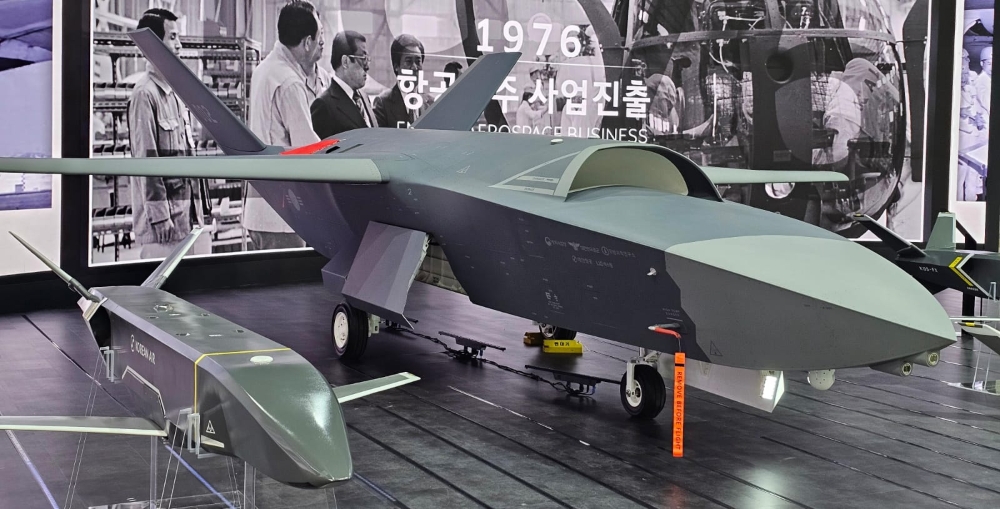
South Korea has unveiled domestic prototypes of a 5,500 Ib-class turbofan engine and a 1,400 hp-class turboprop engine, being developed for use on the nation’s future unmanned combat aircraft and reconnaissance aircraft programmes. DAPA and ADD commenced the research and development of a 5,500-pound class turbofan engine in 2019 and subsequently began work on a 1,400 HP class turboprop engine in 2021.
The 5,500-Ib class powerplant is intended to power a collaborative unmanned combat aircraft that will operate alongside manned fighters as part of a manned-unmanned teaming (MUM-T) concept. The 1,400 hp-class turboprop engine is planned to power a next-generation unmanned reconnaissance aircraft.
Upcoming ground tests will verify the performance of the prototype engines and their domestically developed heat-resistant materials and components.
While South Korea had earlier developed single-use engines for its missile programmes, this is the first time it is foraying into development of aircraft engines for unmanned systems.
The programme is being led by South Korea's Defence Acquisition Program Administration (DAPA) and the Agency for Defense Development (ADD), in collaboration with domestic industry, including Hanwha Aerospace. Jeong Gi-yeong Head of the Future Force Projects Division at DAPA, stated development of aircraft engines was vital as “the final puzzle piece” of South Korea’s K-defence industry.
South Korea has progressed with the development of domestic military UAS engine development as the transfer and export of related technology is strictly controlled through various regulations such as the Missile Technology Control Regime, the International Traffic in Arms Regulations, and the Export Administration Regulations.
South Korea has developed several core technologies for long-life aero engines as part of the programme. This includes heat-resistant materials and components (including turbine blades) capable of long-term use in high-temperature and high-pressure environments. These materials and components are being developed using domestic precision casting technology and thermal shielding coating technology for the first time.




Privacy Policy

Powered by © Mobilbyte s.a.s. Information Technology