


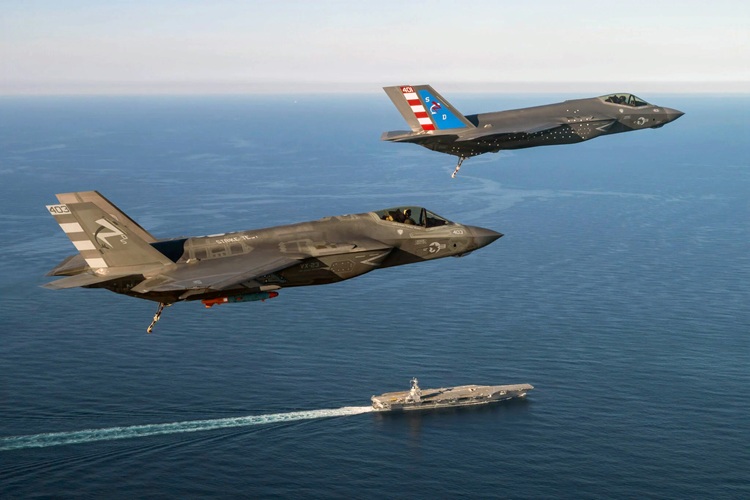
On October 13, 2026, off the US Atlantic coast, integration trials began for the F-35C LIGHTNING II aboard the new carrier JOHN F. KENNEDY (CVN-79), second ship of the FORD class, not yet formally in service with the US Navy.
The trials involve F-35Cs assigned to Air Test and Evaluation Squadron 23 (VX-23), known as the SALTY DOGS (Naval Air Station Patuxent River, Maryland). The 2 aircraft committed to this first test phase, bureau numbers 401 and 403, have carried out multiple takeoff and landing cycles, using the KENNEDY’s Electromagnetic Aircraft Launch System (EMALS) for launches and the Advanced Arresting Gear (AAG) for recoveries. These evaluations fall under Aircraft Compatibility Testing (ACT), the set of activities a new carrier must perform to validate the essential functionalities of its embarked aircraft.
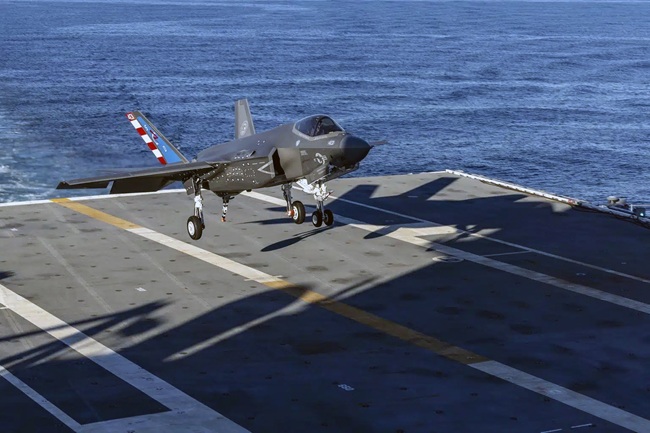
Lead ship GERALD FORD entered service with the US Navy in 2017, but still cannot embark F-35Cs: as a result, the carrier has deployed with an air wing composed mostly of SUPER HORNET and GROWLER aircraft. By contrast, the LIGHTNING has operated regularly from NIMITZ-class carriers for several years, having begun ACT in late 2014 aboard the lead ship of that class and then flying from every other unit in the class starting in 2017. The delay in ACT between the F-35C and FORD-class carriers stems mainly from a US Navy decision to curb operating costs across its carrier fleet, a decision rooted in a specific Congressional mandate. Lawmakers imposed a budget cap on the entire FORD program to prevent runaway costs as the new carriers entered service.
As a result, the US Navy pushed back several milestones in the F-35C integration campaign on the new carriers in order to comply with the Congressional mandate, while avoiding significant delays in bringing the FORD into service. This approach left several of the carrier’s systems only partially functional, affecting the EMALS and the next-generation weapons elevators. In response, the relevant House of Representatives subcommittee, in the legislation tied to the US Navy’s FY 2020 budget, included a provision barring the US Navy from accepting the KENNEDY and subsequent carriers without the capability to embark the F-35C.
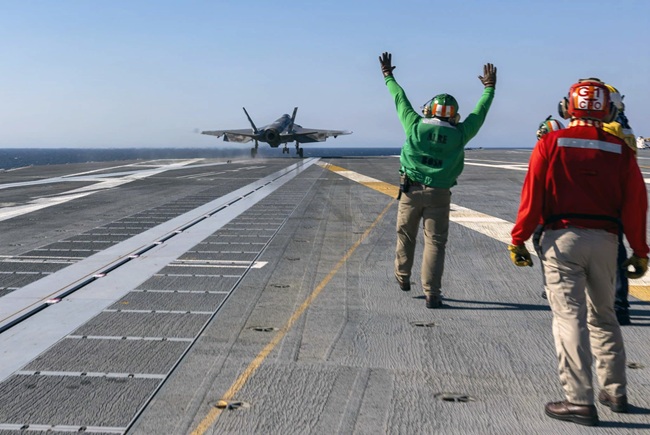
The current activity aboard the KENNEDY fits into this context, with the ship expected to enter service in 2027. Meanwhile, the problems that emerged with EMALS and other systems prompted President Trump to order, in August 2026, a design review to determine whether the remaining FORD-class carriers, starting with DORIS MILLER (CVN-81), could revert to the legacy steam catapults and arresting cables.
Despite this White House position, the chances of such a redesign being carried out appear very slim. A change this drastic — rebuilding the flight deck and much of the deck below, along with all the mechanical and electrical systems required to operate steam catapults and arresting cables, plus reconfiguring several machinery spaces and crew quarters — would likely drive a significant cost increase and, above all, delays in building the future carriers. Although ENTERPRISE (CVN-80), still under construction, would reportedly not be affected, implementing the measure would severely complicate the renewal of the carrier force at a time when the US Navy is already contending with readiness problems across the fleet.




Privacy Policy

Powered by © Mobilbyte s.a.s. Information Technology