



While Israel votes today in what amounts to a referendum on Bibi — one that could end in a dead heat — instability in the Gulf is casting a lengthening shadow over global economic balances and over the U.S. midterm elections, scheduled for next week.
Oil is now firmly and well above $110 per barrel, while yesterday, October 26, gas on the Amsterdam TTF (Title Transfer Facility) closed at €96.17/MWh, against roughly €70 at the start of October. More than that: compared to February 2026, the same index is up nearly 180%. On top of this, EU gas storage sits at 74.6%, the lowest level for this time of year since records began in 2009.
In the United States, diesel prices remain well above $6 per gallon, up 80% on January: a dynamic that inevitably feeds through to transport costs and, ultimately, to the price of goods.
Instability, then, is still the dominant feature. If in September and in the first days of October the picture had improved markedly on the Gulf front — with outbound oil flows, between transits through Hormuz and ship-to-ship transfers in the Gulf of Oman (the latter activity having grown considerably over recent months), topping 14 million barrels per day, roughly 82% of the pre-war average — over the past 10 days output has dropped sharply (by an amount not yet precisely quantifiable).
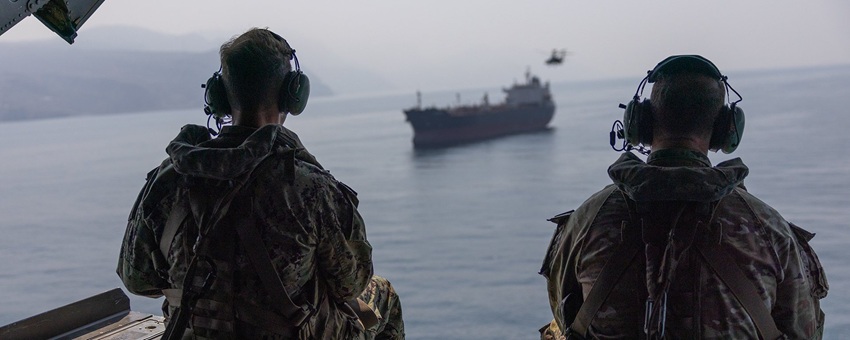
This is the result of 2 factors. The first is the intensification of the war in Yemen, with the Houthis relentlessly targeting Saudi oil sites and installations with missiles and drones — the latest wave hit overnight and this morning against the fields in the east of the country — as well as the East-West Pipeline, which links the Abqaiq oilfield region (in the east) with the port of Yanbu on the Red Sea (in the west), struck again in the past 2 days. The second factor is the expanding reach of Iranian attacks against tankers and cargo ships. Until early October these had taken place almost exclusively in the Strait of Hormuz; now the Iranians are also striking deep inside the Persian Gulf, from the Qatari and Emirati coasts to the waters off the Iraqi Al Faw peninsula, and beyond, into the Gulf of Oman.
Under these conditions, it is clear, this cannot go on much longer, and the barometer is once again pointing to war. While on the negotiating front there has been no progress in recent weeks, Trump appears impatient again and perhaps ready to play the EPIC FURY 2 card right after the midterm elections. Yesterday, meanwhile, Iranian representatives met in Tehran with Saudi Defense Minister Khalid bin Salman, the Pakistani Armed Forces Chief of Staff and the country’s strongman, Field Marshal Asim Munir, and the head of Turkish intelligence, Ibrahim Kalin. A top-level summit aimed at finding a way out of the impasse and heading off a resumption of the war, which is in no one’s interest.




Privacy Policy

Powered by © Mobilbyte s.a.s. Information Technology