


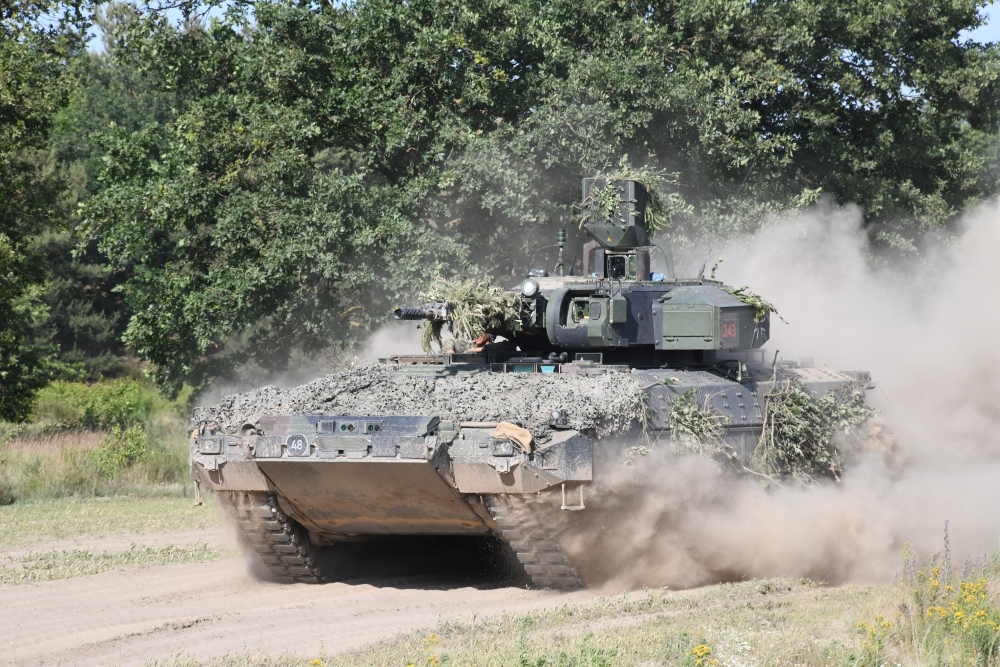
The German Bundeswehr has substantially reinforced its commitment to the PUMA infantry fighting vehicle programme, commissioning Projekt System & Management GmbH (the joint venture between Rheinmetall and KNDS Deutschland) to supply 200 additional platforms. Signed in December 2025 and taking legal effect in January 2026, this contract amendment is valued at approximately €4.2 billion, with deliveries commencing mid-2028.
This latest procurement represents a decisive vote of confidence in the PUMA as the backbone of German armoured infantry operations, while underscoring the vehicle's evolution into one of the world's most capable infantry fighting systems. The order follows an initial framework agreement established in May 2023, which originally encompassed 50 vehicles - a modest beginning that has now expanded considerably.
The PUMA programme's trajectory spans more than two decades of refinement and operational adaptation. Development commenced in the early 2000s as a successor to the venerable MARDER, with the first serial vehicles delivered to the Bundeswehr in 2015. However, the platform's most significant transformation has occurred through successive modernisation campaigns, particularly through the introduction of the S1 construction standard.
The S1 modernisation package has focused on sensors, connectivity and lethality: it includes high-resolution day/night camera systems, integration of the MELLS (Mehrrollenfähiges leichtes Lenkflugkörper-System) anti-tank guided missile (Germany’s designation for Rafael’s SPIKE LR), and new digital radios. Wider S1-associated measures described in earlier programme briefings also include improved commander and gunner optronics, connection to the IdZ-ES “Infantryman of the Future – Expanded System” soldier suite and battle management systems, and preparation for a turret-independent secondary weapon station. Together, these changes aim to improve situational awareness, extend engagement ranges beyond the main gun, and tighten the vehicle–dismount digital link that underpins “system Panzergrenadier” concepts.
The forthcoming S2 construction standard, planned for introduction by mid-2026, promises further capability expansion. Notably, this iteration will incorporate drone defence systems derived from the turret of the Jackal armoured vehicle, addressing emerging unmanned aerial threats that have proven decisive in contemporary conflicts.
Concurrently, the Bundeswehr is modernising its existing 297-vehicle inventory to S1 standard, a retrofit programme scheduled for completion by 2029. This comprehensive fleet standardisation initiative, coupled with the 200 new platform orders, will establish the PUMA as the predominant armoured infantry system across NATO's most powerful land force.
The PUMA's modular protection architecture, exceptional survivability features and integrated battle management capabilities ensure its continued relevance amid rapidly evolving operational requirements - positioning the vehicle as a cornerstone of German and allied ground forces throughout the 2030s.



Privacy Policy

Powered by © Mobilbyte s.a.s. Information Technology