


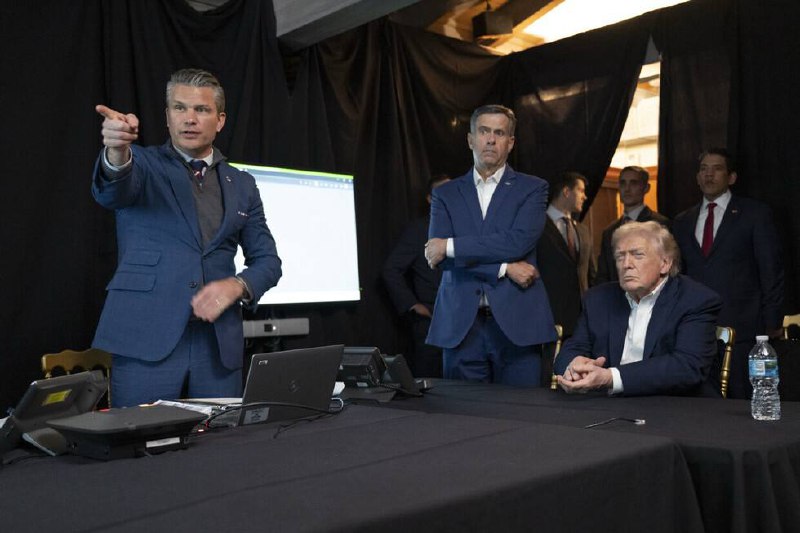
In the hours following the operation that led to Maduro’s capture, President Trump stated that the United States would “run the transaction” in Venezuela, returned to threatening Greenland, and did not fail to warn Iran’s Ayatollahs - currently engaged in repressing internal unrest sparked by a disastrous economic situation and soaring living costs. In short, Trump’s revisionist steamroller shows no sign of slowing, and 2026 is shaping up to be an exceptionally heated year.
Now, hyperbole aside, let us try to read the Tycoon’s words more carefully. Start with Venezuela. The situation is, to put it mildly, fluid. After dismissing opposition leader Machado live on TV, Trump claimed that his administration - read: Secretary of State Marco Rubio - is in talks with the new President Rodríguez. If Washington wants to avoid a direct commitment on the ground, it must at least strike a deal with part of the regime - namely Rodríguez. Moderate and pragmatic, she is the figure who kept the rickety economic structure afloat under Maduro. Hence the need not to dismantle the regime’s framework - from the militia to the National Guard, through the civil administration. Trump must avoid playing the role of Bush, whose dissolution of the Baath Party in Iraq proved a monumental mistake. That risk appears limited: the Tycoon would bargain even with the devil.
As for Cabello, the Interior Minister, and López, the Defense Minister - the regime’s hawks - the sword of Damocles hanging over them is… the Delta Force. That alone may suffice to cool any “martial ardor.” Then there is the issue of gangs and the ELN (National Liberation Army), Colombian rebels who control cocaine trafficking and have long been entrenched in Venezuela. With them, the regime had a tacit pact that ensured collusion and security for trafficking routes, generating revenues at multiple levels and turning Venezuela into a key logistics hub for drugs flowing out of Colombia.
Over the next 60 days, the trajectory of this dynamic should become clearer. Only then will the focus shift to the core strategic issues: oil and critical raw materials.
Maduro’s removal also sends a clear signal to Iran. Tehran and Caracas had built a solid relationship, cemented by their shared status as states under embargoes and sanctions: Iran provided technical-military assistance and drones (modest, in truth), while Venezuela reciprocated with oil and gold. That bond could now unravel - precisely as the Ayatollahs’ regime grapples with internal unrest and an evident crisis of credibility and image, following the stinging defeat suffered in the Twelve-Day War, when Mossad operatives roamed freely across the country and aircraft bearing the Star of David entered and exited Iranian airspace at will, while the Supreme Leader was nowhere to be seen. In short, never more than now might Americans and Israelis be tempted to “finish the job.”
Finally, Greenland. Trump said, “we need it,” drawing the ire of the Danish prime minister and others. Greenland’s strategic potential is immense: critical raw materials - including rare earths, as well as cobalt, lithium, graphite, and more - and a geographic position that is pivotal in the context of the GOLDEN DOME shield. For these reasons, it is highly attractive to Trump. In an era of hyper-competition, with a “constitutive” war ongoing in Ukraine and amid a redefinition of spheres of influence and global governance, anything can truly happen. We have entered a free-for-all—yet this is not merely a contingency tied to the unpredictability and outsized ego of the American president.



Privacy Policy

Powered by © Mobilbyte s.a.s. Information Technology