




As the shadow of war looms over Tehran and the US continues to reinforce its military footprint in the Middle East, the gates of Expo Tel Aviv swing open today for the 2026 edition of Defense Tech Expo (organised by Stier Group), and Future Warfare Magazine is on the ground as the official media partner.
In an era where the gap between a laboratory prototype and a battlefield requirement is shrinking to weeks, this event stands as the epicenter of a unique "combat-proven" philosophy: it is not merely a commercial showcase, but a live study of the battlefield-to-industry feedback loop.
While other global defense fairs often showcase long-term visionary concepts, Tel Aviv Defense Tech Expo offers something more visceral: a doctrine-technology cycle where systems are refined under live fire.
The presence of high-level strategic leadership, including Ministry of Foreign Affaires personnel, and representatives of both big industries (IAI, Rafael, Elbit) and Armed Forces, underscores the importance of the event.
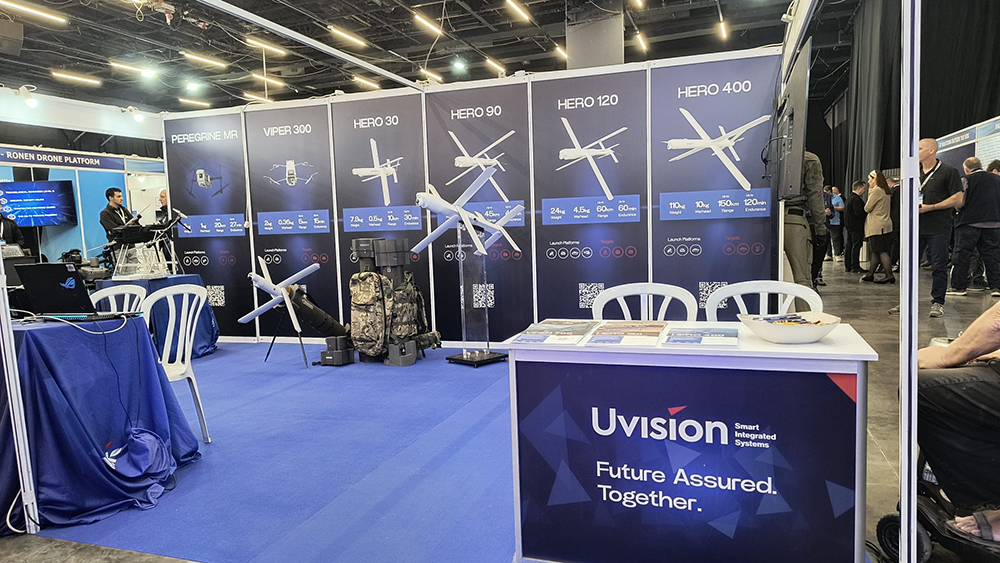
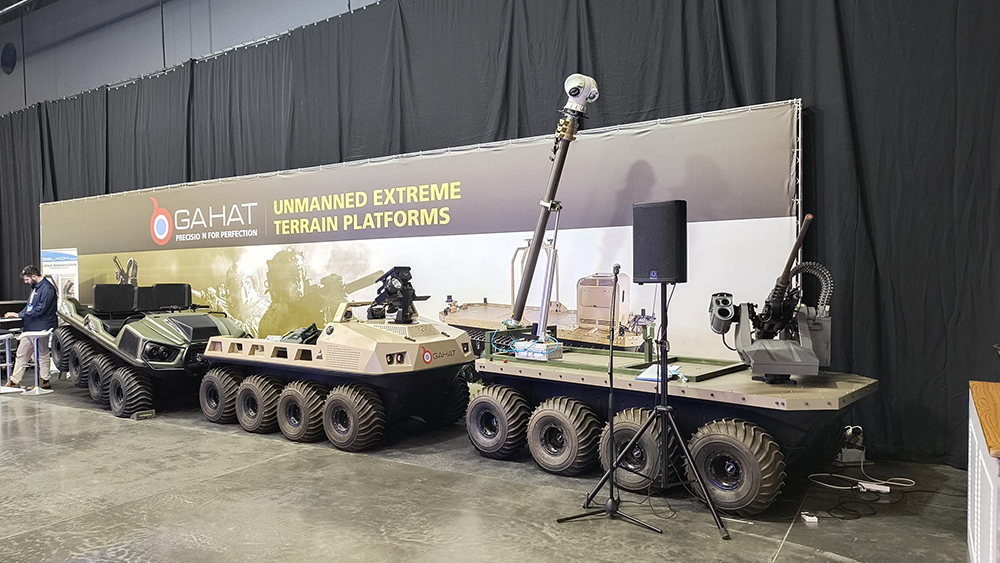
The exposition area - dominated by the IAI stand - is full of drones of every type and dimension, loitering munitions, autonomous ground vehicles (UGV), C-UAV systems and AI based software solutions for Battlefield and homeland security applications, reflecting both Israeli Defense industry expertise and the main features of contemporary and future Warfare.What is clear from the first hours at the expo in that in Israel the fundamental shift where national security policy is increasingly dictated by the speed of technological iteration rather than long-term procurement cycles is already in place: almost all of the showcased systems in already in service with Israeli Armed Forces or Police Forces. The presence of Small and Medium Enterprises (SMEs) and startups stands at the core of the event, and is a sound manifestation of such technological innovaytion rush.
The opening day sets a high bar with an outstanding conference program that bridges the gap between grand strategy and tactical reality. High-profile speakers will set the stage by discussing the future of defense and national security in an increasingly volatile regional and global landscape.
The core of today's debates, however, lies in the "lessons learned" from recent regional and global conflicts. Key panels will dive deep into: Multi-layered Air Defense, analyzing the evolution of Air Defense in the face of saturating high-volume and multi-vector attacks; Drone Revolution, with a focus on UAVs and loitering munitions, marked by a shift beyond simple reconnaissance into autonomous strike roles, increasingly operating as integrated sensor-effector nodes; Land Warfare Innovation: characterized by the integration of elite, specialized units directly into the combined-arms maneuver, acting as catalysts for high-tech tactical execution. This shift is mirrored by a model of bottom-up applied innovation, where technological requirements and modifications are generated by frontline feedback rather than top-down procurement, rapidly fueling the deployment of robotics and autonomous systems to achieve tactical overmatch on the modern battlefield. A Key take-away from the conferences: the “Israeli Laboratory” effect facilitates a hyper-accelerated maturation of military doctrine and defense technology, turning battlefield attrition into a primary driver of industrial innovation.
A defining characteristic of this ecosystem, which visitors will observe in the exhibition area, is the symbiotic relationship between national champions - like IAI, Rafael, and Elbit -and a sprawling network of Small and Medium Enterprises (SMEs) and startups, that form the backbone of the Israeli defense ecosystem. Unlike many European or North American models where innovation is often isolated within Tier-1 primes, the Israeli model thrives on a fluid revolving door between the armed forces and the private sector. Mandatory service and a robust reserve system ensure that engineers possess firsthand operational experience, effectively removing the disconnect between the end-user's needs and the developer's assumptions. This structural advantage is reflected in the fact that approximately 10% of the Ministry of Defense's R&D budget for 2026 is now explicitly allocated to startups, recognizing that agility in drone, robotic, and autonomous system development often resides outside traditional corporate structures.
As the Expo progresses into its second day, the analytical focus will sharpen on the specific technical enablers of this transformation, namely the role of Big Data and autonomous systems in achieving tactical overmatch. The interconnection between technological development and the transformation of military doctrine remains the primary takeaway for international delegations. While the hardware on display is impressive, the true innovation lies in the underlying mechanism that allows a combat-proven requirement to be translated into a software update or a hardware modification in a matter of months.
Future Warfare Magazine is here, “patrolling” the show and attending the closed-door briefings throughout Day 1. Stay tuned for our upcoming deep dive, where we will bring you exclusive insights from the floor and the latest updates on the tech that is redefining the modern battlefield.





Privacy Policy

Powered by © Mobilbyte s.a.s. Information Technology