



HMG highlighted how 400 million will be spent in year for deep strike projects, but neglected to say it’ll still result in zero or near-zero operational deliveries
On February 13, the Ministry of Defence published a news release saying that it will spend “over £400 million this financial year on hypersonic and long-range weapons including joint projects with France, Germany, and Italy”. While this is much needed, the news release fails to mention that this will still result in near zero, if not full zero, deliveries of operational missiles to the British forces.
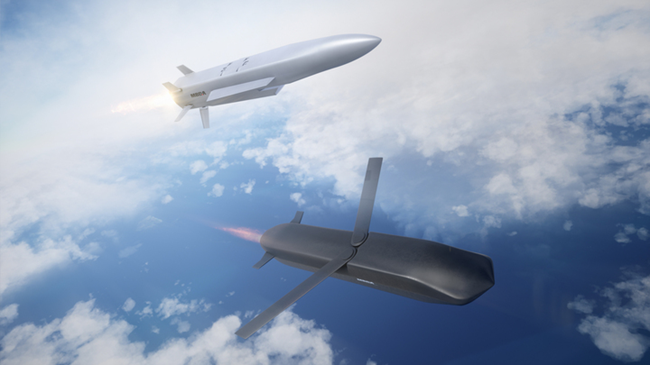
The main, more advanced and important project, the one involving France and Italy, is the Future Cruise & Anti-Ship Weapon, for which MBDA is developing the solution, now known under the name STRATUS as unveiled last year. Launched as a UK-France study all way back in 2014, it progressed with concept studies launched in 2017 and Development phase jointly launched Feb 2022.
As we know, the Future Cruise & Anti-Ship Weapon ended up being 2 missiles: a subsonic, highly stealthy, heavy hitter led by UK, now known as STRATUS LO (Low Observable) (and earlier, within MBDA, as the TP15); and a supersonic one led by France (STRATUS Rapid Strike RS). Of the latter we have learned at the Paris Airshow in 2025 that it is optimized to serve also as an anti-radar weapon, including against airborne radar aircraft. Italy has since joined project and a 3-nation contract signature to finally launch the Demonstration and Manufacture phase is due (indeed overdue).
A January written answer said Full Business Case is due this Summer, which is already significantly later than once planned. MBDA has been granted integrative funding to continue work while waiting for the 3-National contract. UK integrative funds were first awarded in 2025 and then extended to cover MBDA work to the end of 2026. We know this through the UK National Infrastructure and Service Transformation Authority (NISTA) report for Fiscal Year 2024/25 which noted that MBDA completed the Assessment Phase on time by end 2024. It’s unclear why progress to the next phase is so delayed, but NISTA interestingly noted that France had not awarded funding for the supersonic missile in 2024/25, producing a stoppage in work on it which led to the UK underspending on the program as it did not have to pay its own share for the STRATUS RS.
With Full Business Case and (hopefully) tri-national contract sometime later this year, FCASW will absorb most of the 400 million. Note how it had been due to spend 227m already in 24/25, reduced to 185 by delays to the supersonic weapon. These numbers will be going up in new phase. For the UK, FCASW/STRATUS is the intended replacement for STORM SHADOW & HARPOON. It will come as Air Launched (answering the Selective Precision Effect at Range, SPEAR 5, requirement for the RAF on Typhoon and hopefully F-35) and as vertical launch, MK41-fired on Type 26 (and Type 31 hopefully).
At present there is no guarantee that any of the 3 Nations will be buying both weapons, despite them being very different and complementary by design approach. So far the UK government has provided confirmations only for the subsonic STRATUS LO (TP15), both for Air and MK41 use. While FCASAW progress is to be welcomed, what must be clear is that it will be some time still before FCASW results in any new missile added to operational stockpile. Maybe we will see first test launches this year, but missiles added to the stockpile will be zero and, indeed, original ambitions to have the new weapon on Type 26 already in 2028 appear very much at risk.
The joint project with Germany is the "Deep Precision Strike" weapon with 2000 km range that was jointly announced in May 2025 in the context of European Long-Range Strike Approach (ELSA). It is in its early stages, so early in fact that it’s still not even clear whether it will be a cruise, ballistic or hypersonic weapon. It’s assumed it will be ground launched but even that remains vague.
Latest UK MoD release says "a new joint study phase about to begin, accelerating both future stealth and hypersonic weapons”. It might or might not signal the intent to make it a hypersonic missile, but it remains anybody’s guess. How much money this project will be absorbing in-year is hard to say. Might still be as little as a handful of millions in such early days.
Service entry is anticipated for the 2030s so, whatever it ends up being it again adds nothing to the stockpile in the near future.
During 2024, the UK MoD set up a 1 billion 7-year framework for hypersonic technology and weapons and is providing funding to a variety of companies for components and experimental campaigns, but the total expenditure to this day is well below 100 million still.
Some UK funding is also invested in a number of private companies, including Hypersonica, the UK-German startup which made news this month for the successful first hypersonic flight test in Norway. Some UK money is also invested in AUKUS Pillar II's Hypersonic Flight Test & Experimentation (HyFliTE) and in HYPERSONIX (an Australian company with US DoW backing), with a test launch scheduled within the end of the month. The road to a UK operational weapon is still not clear.
The UK has just joined a second ELSA project, for One Way Effector (OWE) drones for strikes on ranges of 500+ km, which should lead to a “suicide drone” carrying, reportedly, a 50 kg payload which could be a literal 155 mm shell to ensure low cost and mass production capacity.
Internally, the UK is already flight testing a number of entries for Project BRAKESTOP, a 600 km OWE it's developing in-house for Ukraine. How the 2 projects will or will not interact is unclear. BRAKESTOP is subsonic and should carry 2-300 kg of payload over 600 km at speeds of at least 600 km/h. It's running slightly late but hopefully can enter production within this year, but is destined to Ukraine.
Finally, we will also mention Project NIGHTFALL, a cheap tactical ballistic missile the UK is trying to develop in house to supply Ukraine, again. Requirements have been tuned down at tender release point in December 2025: the initial ambition for a 600 km range was revised down to 500, with payload reduced from 300 to 200 kg. Aim is to award "up to 3" development contracts which will hopefully lead to test launches within 9-12 months. In other words: production of NIGHTFALL for delivery to Ukraine won't start before 2027 at earliest. UK use is not planned at present (as of 26 Jan 2026 written answer by Minister Luke Pollard).
No information has been provided about plans announced in July 2025 jointly with France to restart production of STORM SHADOW missiles.
The cruel reality is that the 400 million investment is extremely important but still leads to zero operational missile deliveries for the year. As for the path to an operational hypersonic weapon, it remains uncertain and with no real timeframe attached.
Very important questions remain unanswered about FCASW/STRATUS, as mentioned earlier: first of all whether the UK will buy both weapons, and then in terms of platform integrations. Will embarkation on Type 31 happen, and will integration on F-35 be funded? Early fit checks were carried out to ensure F-35 compatibility (obviously for external transport due to the missile sizes), but future plans remain unclear.




Privacy Policy

Powered by © Mobilbyte s.a.s. Information Technology