



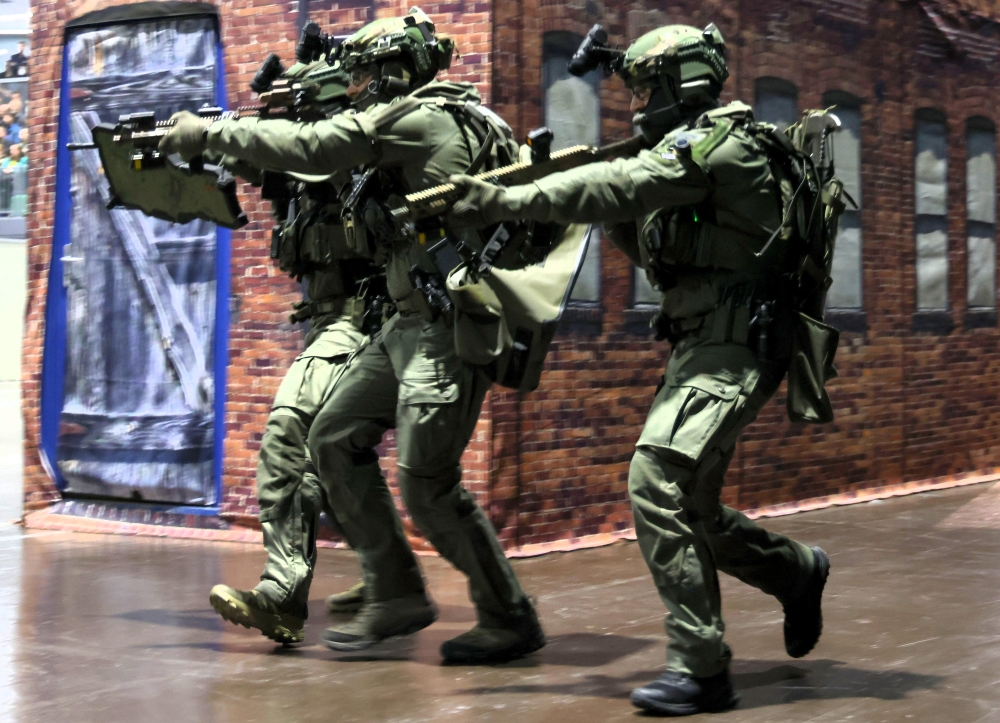
Enforce Tac 2026 in Nuremberg confirms its evolution from a niche homeland security gathering into a broader defence, law enforcement and technology arena, with the war in Ukraine, hybrid threats and networked security shaping almost every discussion. The presence of major defence primes, a new Armoured Forces Area, a dedicated electronics and software defined defence focus and an expanded counter UAS offering underline how the show is now as much about hard combat power as about classic policing and internal security.
Defence takes centre stage
The political framing of Enforce Tac 2026 is explicitly strategic. Chancellor Friedrich Merz’s patronage and his emphasis on deterrence “so we will not have to defend ourselves” place the exhibition squarely within Germany’s Zeitenwende and NATO’s rearmament context. The guiding theme “Networked Security” is reflected in an integrated view of Bundeswehr, police, civil protection, cyber defence and industry, with Enforce Tac positioned as a closed community hub where these communities converge.
Two structural innovations reinforce the defence weighting. First, albeit small, the Armoured Forces Area in Hall 11 provides a dedicated stage for heavy land systems, from wheeled IFVs and artillery to air defence and unmanned platforms, signalling that large military equipment and combined arms manoeuvre are now part of the show’s mainstream, not a side note. Second, the Enforce Tac Conference under the motto “Electronics Shaping the Future of Defence” and the cooperation with cybersecurity fair it sa under “Software Defined Defence” bring C4ISR, EW, AI and cyber into the core narrative, highlighting that digital architectures are now as critical as armour and calibres.
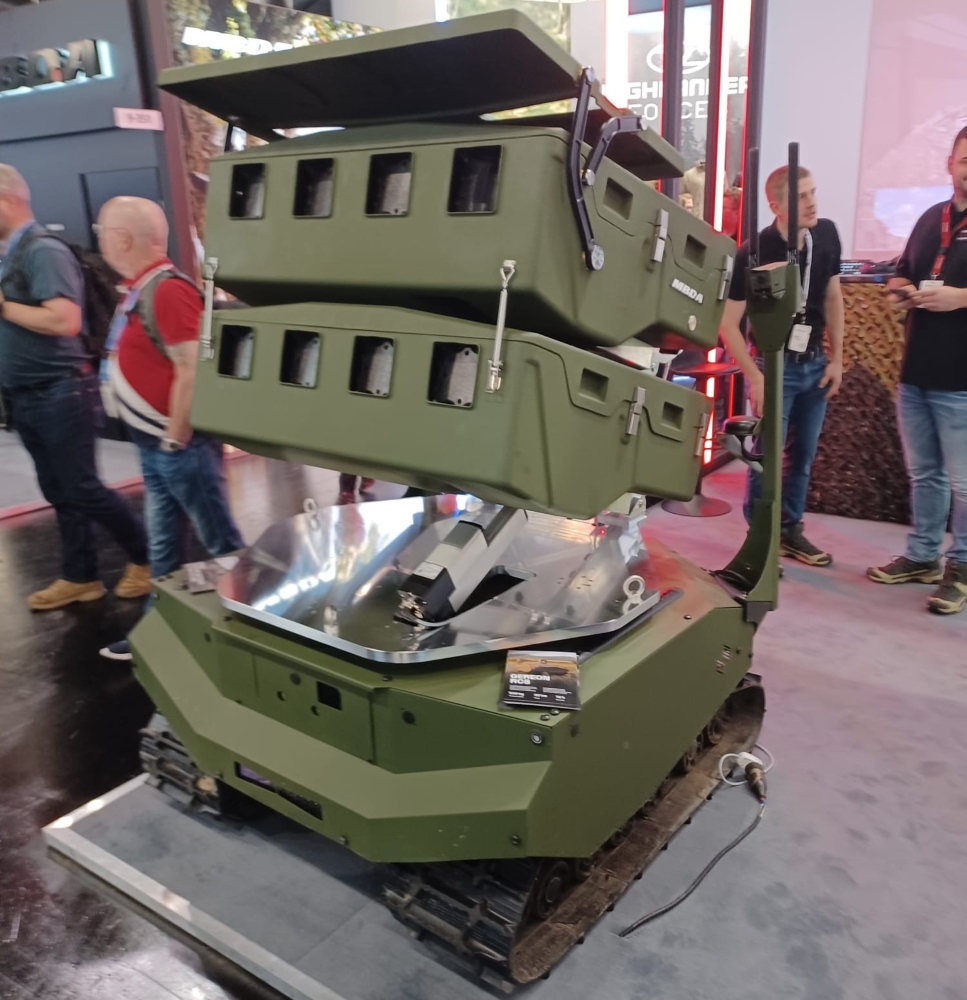
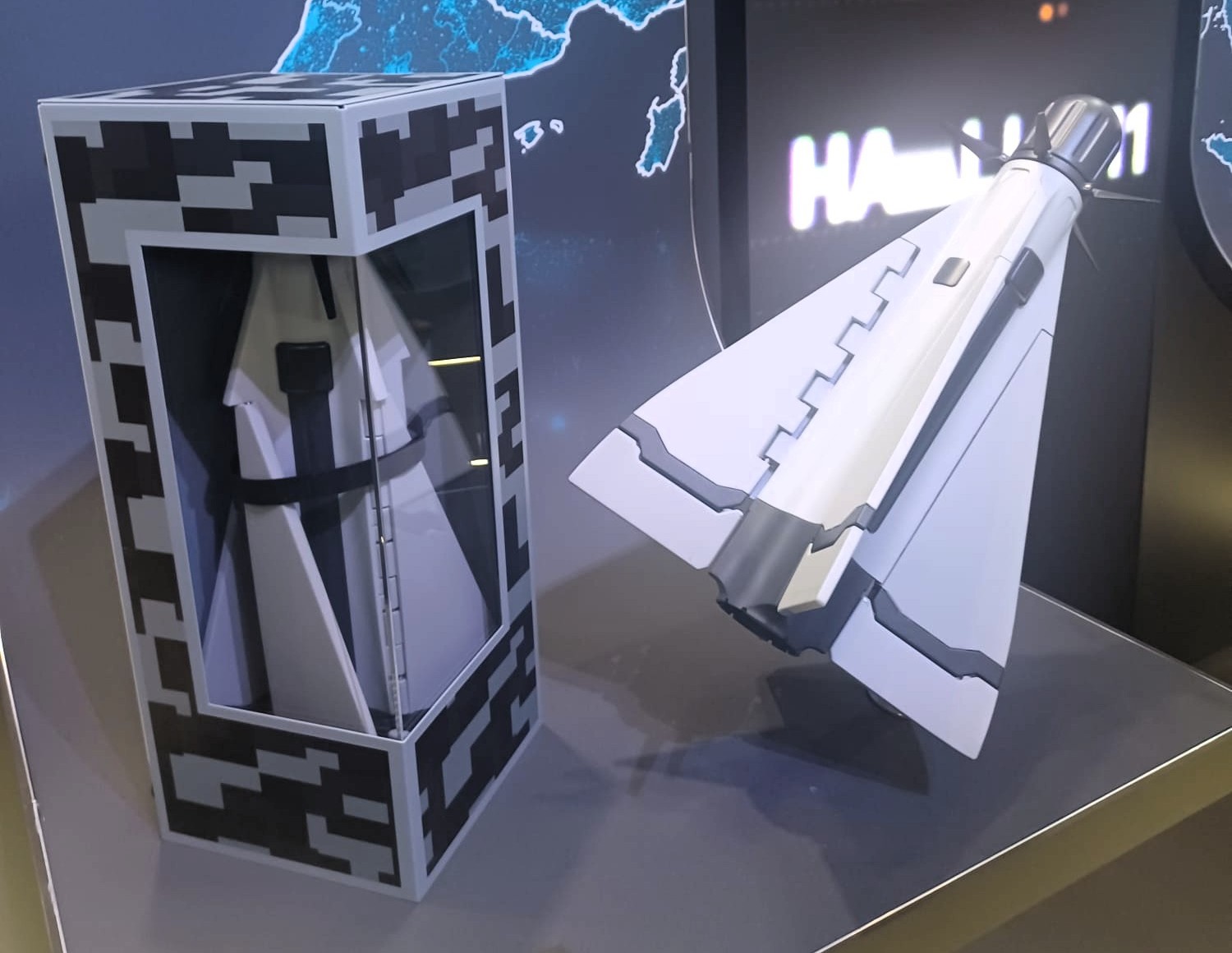
Within this expanded frame, established defence houses visibly drive the agenda. MBDA showcases ENFORCER as a light, guided shoulder launched weapon optimised for precision engagements against moving and concealed targets beyond conventional infantry ranges and extends the concept into autonomy by pairing ENFORCER with ARX’s GEREON RCS Unmanned Ground Vehicle (UGV) in the ENFORCER GEREON concept demonstrator. The pairing illustrates a clear trend toward scalable robotic fires, shifting risk from dismounted soldiers to expendable platforms while retaining surgical effects in cluttered environments.
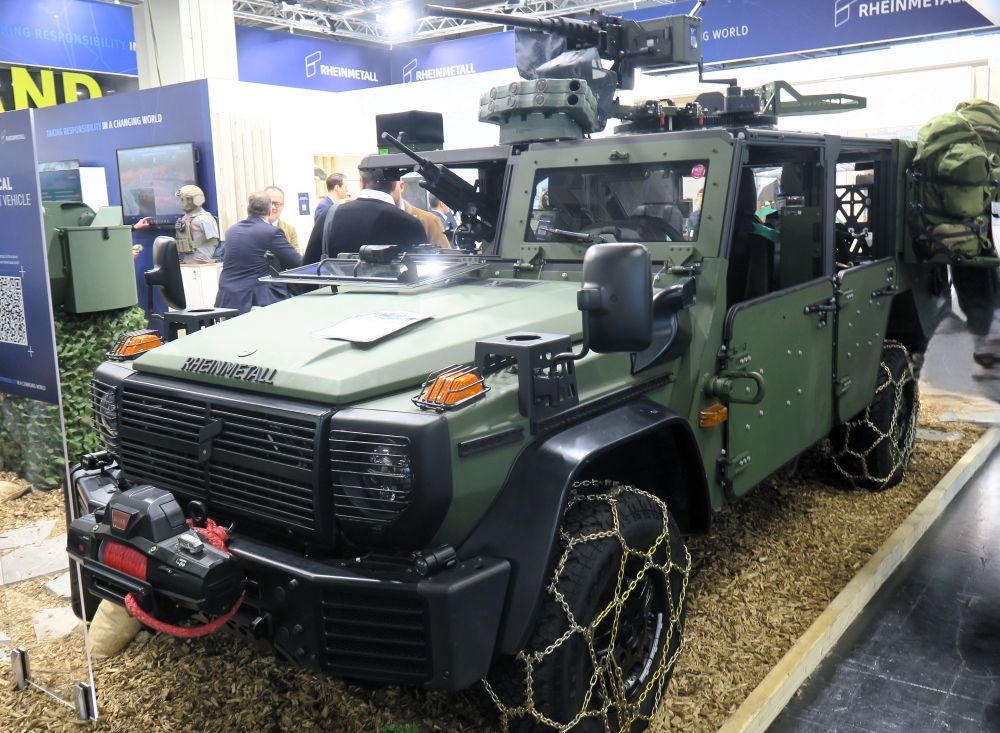
Rheinmetall’s growing footprint is visible both in land combat and air defence. On the land side, the company appears in the Armored Forces Area with vehicles for Germany’s emerging “medium forces”, such as the FUCHS JAGM. After its debut at DSEI London in autumn 2025, Rheinmetall has presented the next-generation JAGM armoured missile tank destroyer at a trade fair in Germany. According to the company, it is the world’s first vehicle to be equipped with 24 vertically launched AGM-179 Joint Air-to-Ground Missiles (JAGMs) or AGM-114L HELLFIRE LONGBOWS by Lockheed Martin. Futhermore, the company also showcased the CARACAL small tactical vehicle for air assault and the BOXER based SCHAKAL wheeled IFV with PUMA derived unmanned turret, underscoring the push for strategic mobility without abandoning protection and firepower. In the air defence domain, the SKYRANGER 30/35 concept, already trialled on BOXER, points to mobile, networked counter drone and SHORAD architectures combining programmable airburst cannon and new effectors like MBDA’s DEFENDAIR, geared to swarm scenarios and low altitude threats.
Diehl Defence, traditionally associated with ground based air defence, uses Enforce Tac to highlight its move into highly mobile counter UAS with the GARMR system. GARMR is conceived as an all in one package that can accompany light and mechanised forces, combining rapid fire guns with long range effectors such as the CICADA interceptor to counter the full spectrum of UAV threats, from micro drones to loitering munitions. This builds on Diehl’s earlier SKY SPHERE concept and reflects a wider shift from static point defence to convoy and manoeuvre protection against FPV and “kamikaze” drones informed by Ukrainian experience.
Helsing’s growing role in software defined defence is visible indirectly through the show’s emphasis on AI enabled sensor fusion, electronic warfare and autonomous behaviours, including in EW centric solutions such as R2 ODIN for RF situational awareness and in the wider robotics ecosystem. Meanwhile, Rohde & Schwarz’s long standing leadership in secure communications and spectrum management is echoed in the focus on resilient voice and data, software defined radios and electromagnetic spectrum awareness, all critical enablers for the “glassy battlefield” described by the German Army’s Inspector. Furthermore, the company is expanding its portfolio through a new OSINT platform presented by Munich Innovation Labs.
Taken together, the prominence of MBDA, Rheinmetall, Diehl, Helsing and Rohde & Schwarz – alongside heavy land systems, GBAD, C UAS and AI enabled C4ISR – demonstrates that Enforce Tac has decisively tilted toward the defence and war fighting end of the internal security - defence continuum. This shift is validated by operational voices: Lieutenant General Christian Freuding, Chief of the German Army, openly warns that a high intensity land war in Europe cannot be ruled out, and calls for mass, high end capability and industry mobilisation are echoed across the exhibition.
Small arms: from patrol rifles to precision systems
The small arms sector remains a core pillar of Enforce Tac, but the discussion has clearly shifted from stand alone weapons to complete systems. Across armed forces and police, articles and exhibitors describe assault rifles, pistols and machine guns as elements of integrated soldier systems, complemented by optics, suppressors, night fighting devices and digital interfaces. Beretta Defence Technoloigies (BDT) features in a broader survey of international assault rifle programmes, with the Italian Army’s NARP chosen as its next generation modular 5.56×45 mm platform, initially earmarked for special forces before progressive introduction across the wider force. This trajectory mirrors a wider European trend: AR architecture rifles with short stroke gas piston operation, offered as modular families in different barrel lengths and calibres, reflecting operational experience from recent high intensity conflicts, including Ukraine, and other theatres.
FN Herstal appears both through its MINIMI and EVOLYS machine gun families and via the wider discussion of PDW calibres such as 5.7×28 mm, now NATO standardised under STANAG 4509. EVOLYS in particular represents the emerging category of ultra light machine guns optimised for dismounted manoeuvre, prepared to trade quick change barrels for reduced weight and closer integration with optics and fire control. On the law enforcement side, FN’s FN 15 patrol rifles highlight the ongoing trend in European police forces away from pistol calibre SMGs toward semi automatic 5.56 mm “Mitteldistanzwaffen” for armed response and counter terror units.
Smith & Wesson, though less explicitly profiled than European players, fits into a visible renaissance in service pistols and patrol carbines, as many forces replace legacy sidearms and integrate optics ready slides, modular frames and suppressor ready designs. The broader pistol market described at the show – from Glock’s latest generation to CZ, SIG Sauer and Walther – is moving toward family concepts, striker fired mechanisms, widespread red dot integration and full system procurement (holsters, lights, training, ammunition) rather than stand alone weapon buys.
This systems approach is underpinned by accelerated innovation in optics and night fighting. L3Harris, Theon and Exosens showcase successive generations of Gen III image intensifier tubes, fused NVG – thermal devices and augmented reality overlays, with the NOVA goggle pitched as a scalable night vision baseline for the “Green Army” and BNVD Fused plus CMNDO bringing sensor fusion and AR into special operations and high end units. European programmes, including British and German acquisitions of advanced weapon sights, confirm that the “infantry half kilometre” is now expected to be exploited routinely by general purpose troops with magnified optics and sophisticated fire control.
Training and simulation: from classroom to combat realism
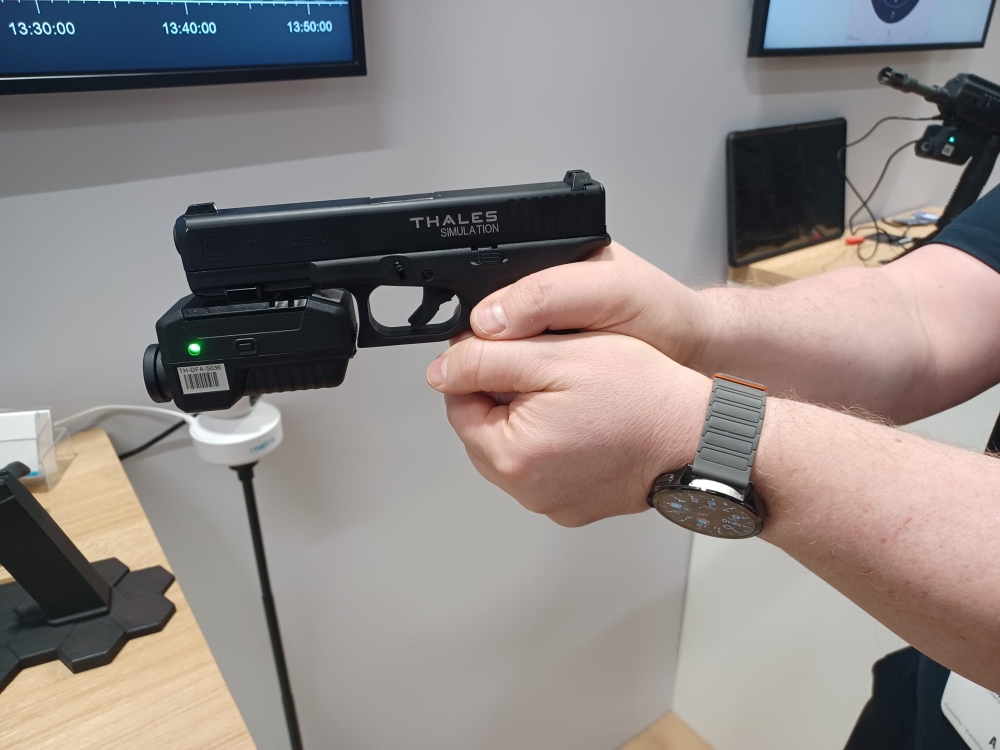
The training and simulation strand at Enforce Tac 2026 reflects hard operational lessons from Ukraine and other conflicts. Thales Deutschland is present with its portfolio of night vision, weapon sights and soldier system integration, but also with a strong emphasis on live, virtual and constructive training architectures that can replicate complex, high tempo, multi sensor environments. The integration of fused night vision systems, smart batteries and AR overlays into training – rather than merely delivery to operational units – is increasingly seen as essential if troops are to exploit these capabilities under stress and in degraded conditions.
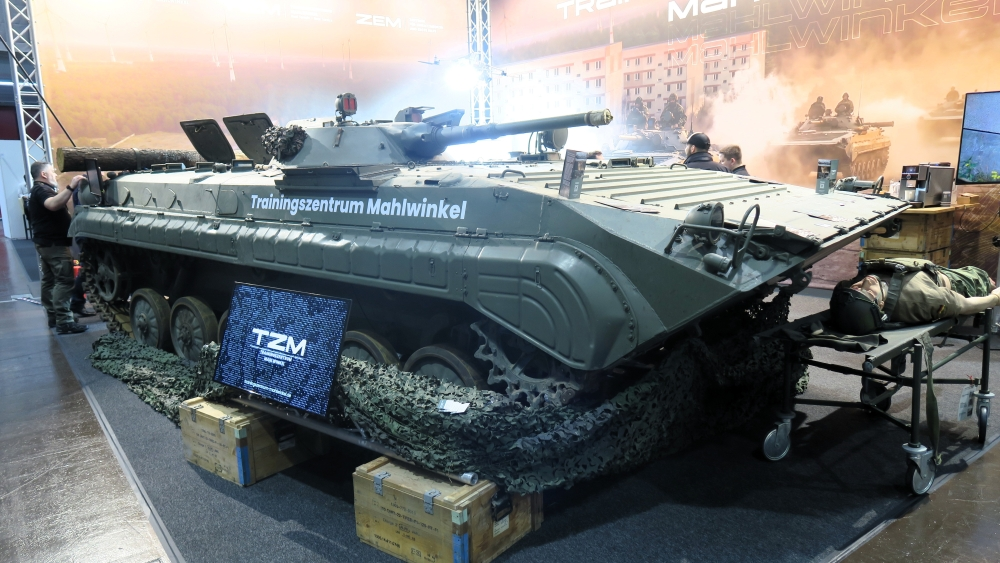
Trainingszentrum Mahlwinkel, one of Germany’s key live training hubs, exemplifies the trend towards combat realistic force on force training that reflects drone threats, EW, contested spectrum and high density combined arms manoeuvre. Simulation must now factor in drone swarms, cyber effects, disinformation and attacks on critical infrastructure alongside conventional kinetic challenges.
From drones to counter drones
A defining theme across halls and conference panels is the mutual escalation between drones and counter drone systems. Articles and exhibits describe how FPV drones, loitering munitions and swarming tactics have irrevocably changed land warfare, pushing the individual soldier, vehicle crews and even strategic infrastructure into persistent UAV cross hairs. Ukrainian experience, including the creation of dedicated Unmanned System Forces and mass production of FPV drones, is repeatedly cited as a warning that European forces must urgently adapt force design, doctrine and equipment.
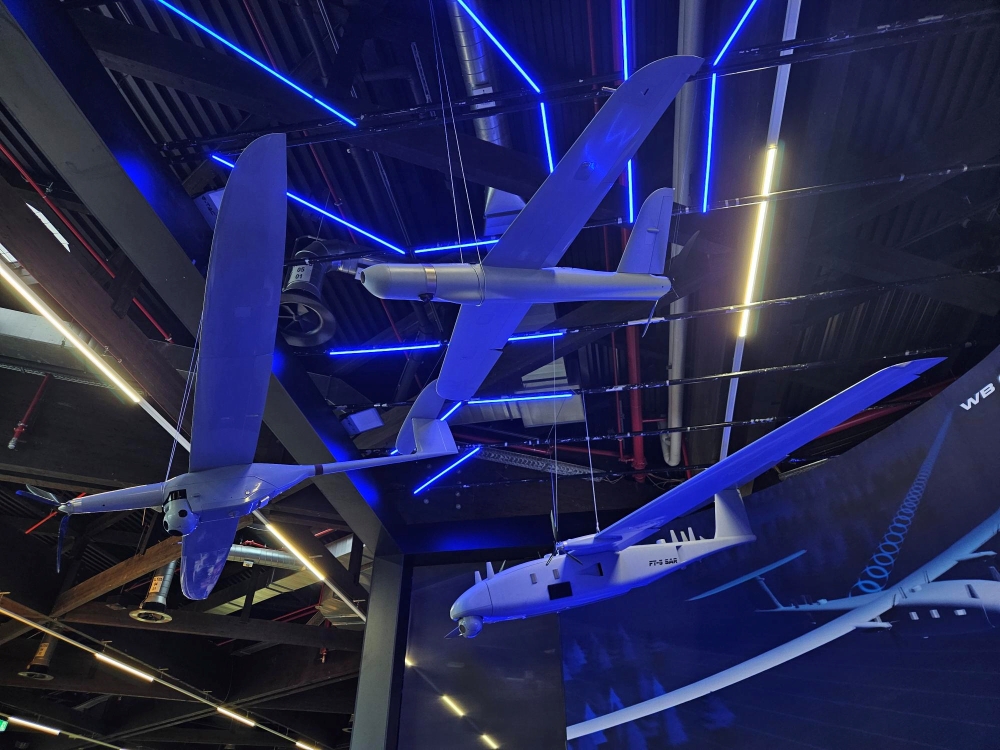
For instance, WB GROUP’s strong presence at Enforce Tac 2026 also illustrates how European industry is operationalising lessons from Ukraine and other recent conflicts. By showcasing the full FLYEYE, FT 5 and WARMATE ecosystem, the company underlines that loitering munitions and tactical UAS are now viewed less as niche enablers and more as integral parts of combined arms and territorial defence concepts. The debut of the FT 5 SAR variant outside Poland is particularly noteworthy, as it combines day night EO/IR payloads with synthetic aperture radar to deliver all weather, wide area reconnaissance and counter battery cueing in one platform. In parallel, the latest WARMATE 3 and WARMATE 5 configurations, with interchangeable 3–10 kg warheads and ranges of up to 70 and 100 km respectively, demonstrate how man portable loitering systems are evolving toward longer reach, heavier effects and closer integration with wider unmanned and C2 architectures. WB GROUP uses Enforce Tac to reinforce its role as a Polish technology champion with a genuinely European and global footprint in command and control, unmanned systems and precision strike.
Against drone threats, Enforce Tac offers a dense ecosystem of counter UAS solutions spanning RF sensing, protocol level takeover, kinetic effectors and integrated C2. For example, DroneShield showcases a layered portfolio ranging from the RFPATROL Mk2 wearable detector for dismounted users to the vehicle mounted DRONESENTRY X Mk2 and the DRONESENTRY C2 command and control suite, all built around AI driven RF detection and classification that can identify known and unknown drones rather than relying on static signal libraries. Sentrycs, for its part, demonstrates its protocol manipulation “cyber over RF” approach with the new portable SCOUT system, which passively detects, identifies and then takes control of unauthorised drones to guide them to predefined landing zones without using jamming or kinetic effectors – a key advantage in dense urban environments where collateral RF interference is politically and operationally unacceptable.
At the soldier level, Israel Weapon Industries’ ARBEL system takes a different path by turning standard AR 15 type rifles into effective anti drone tools through a computerized fire control module that analyses the shooter’s micro movements and autonomously times follow up shots when hit probability against small, fast aerial targets is highest, extending interception ranges to around 450 m by day and 250 m by night. By leveraging existing weapons, optics and marksmanship skills rather than dedicated interceptors, ARBEL points to a cost effective, scalable model in which every infantry section becomes an organic counter drone asset.
On vehicles, Mehler Protection’s SCILT stand off close in protection system is tailored to defeat drones attacking from ditches and dead ground at extreme short range, combining sensors, alerting and effectors in a 360 degree envelope around platforms. Diehl’s GARMR and Rheinmetall’s SKYRANGER represent the higher end of the spectrum, delivering mobile, layered air defence with guns, missiles and electronic measures integrated into networked C2 and sensor frameworks.
Outlook: deeper coverage to follow
Enforce Tac 2026 thus marks a significant inflection point: the defence sector is not only more visible; it defines the show’s conceptual centre of gravity, from high end air defence and robotics to soldier system modernisation and AI enabled C4ISR. Law enforcement and homeland security remain core constituencies, but they are increasingly addressed through dual use technologies – drone detection, protected mobility, night vision, tactical comms – that sit astride domestic and expeditionary requirements.
Future Warfare Magazine will return to several of these strands in greater depth in forthcoming articles.




Privacy Policy

Powered by © Mobilbyte s.a.s. Information Technology