



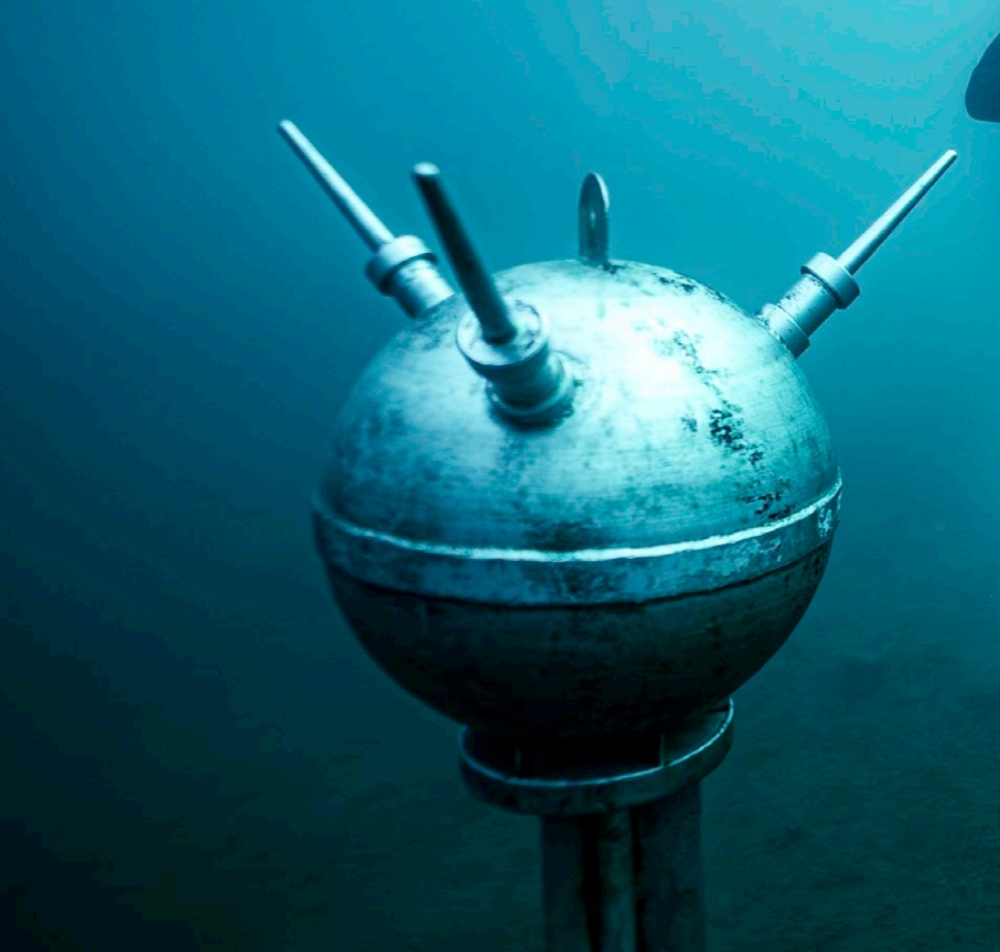
Maritime security in strategic chokepoints such as the Strait of Hormuz has once again become a central concern for global trade and naval planners alike. Recent analyses and industry warnings stress that naval mines remain one of the most asymmetric and disruptive tools available to state and non state actors, capable of paralysing sea lines of communication with limited resources and deniable means.
In this context, RTsys has publicly highlighted how even a relatively small deployment of moored contact mines and seabed laid influence mines could severely disrupt maritime traffic for years, making speed, flexibility and operational simplicity decisive factors for any credible mine countermeasure (MCM) posture.
Against this backdrop, FW MAG secured an exclusive conversation with Sylvain Paquereau, Head of Sales for NATO countries at RTsys, to discuss how the French company intends to respond to this renewed mine threat. In this interview, Paquereau explains why navies are still struggling in modernising mine warfare tool sets, how autonomous and rapidly deployable MCM systems can help reopen contested sea lanes, and what industrial and procurement challenges lie ahead as demand for such capabilities surges.
FW MAG: In the wake of the latest events in the Hormuz strait, what is your perception of the threat from an industrial standpoint?
S. Paquereau: With what is happening today, the threat is clearly increasing. There is, in the media and among the wider public, a real lack of awareness of the mine threat. Many people see mines as something “old school” that no longer really exists, whereas in reality the threat is very much there.
First, you still have legacy mines that remain in place on various theatres because of past conflicts or that are in stock across numerous countries. At the same time, new generations of mines are emerging, including systems integrating artificial intelligence that augment their sensors’ sensitivity – and thus the effectiveness of the sea mine. So, the threat is both inherited from the past and being renewed technologically. We can see this very clearly today in the Strait of Hormuz is that the risk of blocking traffic by mining a relatively small area is very real.
Luckily, from our perspective as manufacturer of UUVs and acoustic sensors for mine countermeasures, we do possess the technology to address this kind of challenge. If the conflict were to end soon, there would be an immediate need for rapid mine-clearance operations. We provide systems that are simple to deploy and that allow very quick initial assessment of an area, using our micro- and light- AUVs, then moving on to classification with our diver sonars, and ideally all the way to neutralisation with new products that are currently under development and will be on the market very soon.
FW MAG: Aren’t navies ill-equipped today in this sense?
S. Paquereau: There are several factors to take into consideration. First, in most defence ministries, the priority for equipment and budget is represented by politically appealing major programmes in which you can underline large creation of value and employment, whereas mines have been long time neglected and somehow considered taboo. Mine warfare is not necessarily neglected per se, but it is certainly not on top of the list. Yet, as we observe in conflicts like those in Ukraine or in the Strait of Hormuz, the importance of the issue becomes obvious.
In Ukraine, the priority understandably remains land capabilities – missiles, ground force protection, and so on – but we do not always realise how critical the mining of the Black Sea is, particularly with the risk of drifting mines. There will be major mine-clearance efforts to carry out after the conflict, both in the Black Sea and, for example, in the North Sea. We already see growing demand for mine warfare equipment, both in terms of opportunity pipelines and project numbers. Is that demand fully aligned with the actual threat level? It is hard to say. What is clear is that navies should be better equipped to deal with a very real threat. The main constraint is often defence budgets, which do not always keep pace because other priorities compete for the same resources. That is what emerges from our discussions with different navies.
FW MAG: With what is happening in Hormuz, you are going to be more under the spotlight. For a company of your size, what are the main opportunities, and what are the key challenges?
S. Paquereau: The main opportunity is that the war in Hormuz highlights strongly the need to equip against naval mines. The topic is now in the media, so it is on the public agenda, too. Navies already know they must invest in this area, but the ongoing conflict will probably push them to move faster and will help them asking for financing those capabilities. The beneficial effect for is that this may encourage navies to take a closer look at what is actually available on the market. Our advantage is that we offer solutions that are easy to deploy and operate. Our systems are not heavy and do not necessarily require large, dedicated ships equipped with cranes or davits – at least for some duties. Indeed, our systems stay below 45 kg and can be carried by two people. We focus on responsiveness and simplicity of use. This can be particularly attractive for navies with significant operational needs but limited budgets: we can provide an effective, affordable solution that still meets their requirements.
The main challenge on our side would be our ability to keep up with a potential surge in demand. Since the beginning of the war in Ukraine, there has been a lot of discussion, in France and elsewhere, about industrial capacity: producing more, and producing faster. This is a real issue for the whole sector, and we are no exception. However as a SME company we do remain agile and reactive, which is clearly one of strong skills: we have reorganised ourselves to address it, for instance, we inaugurated a new factory in January 26, which already give us higher production capacity and shorter lead times. Also we are investing as much as we can in industrial tools and customer support that can enable us to cope with a growing demand.
FW MAG: Do you think there could also be a spillover effect on procurement procedures? Will navies be able to simplify their procurement processes, or will they remain long and complex, with procedures that take years?
S. Paquereau: This is indeed another major issue. The real question is whether defence ministries are truly able to accelerate procurement and simplify their processes. Since the start of the war in Ukraine, many statements have been made about the need to speed up and streamline acquisitions, but in practice procedures remain heavy and time consuming. Some nations manage to move a bit faster, to “push the button” more decisively, but overall defence administrations are complex structures. This can become a real obstacle when you need to react quickly to a crisis.
FW MAG: Thank you for your insights!
You can also discover more about RTsys in FW 4-2025, where we reported from inside the company's production facilities and examined its growing portfolio of underwater technologies in detail.




Privacy Policy

Powered by © Mobilbyte s.a.s. Information Technology