



In the last 24 hours, the Middle East has witnessed the most concentrated sequence of strikes against energy infrastructure since the start of the War, with direct consequences for global oil and gas markets and the stability of the entire regional order.
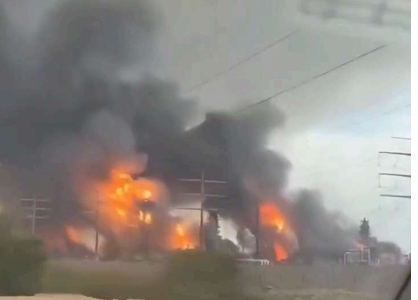
The trigger was the Israeli airstrike on March 18 against the onshore processing hub of Asaluyeh (pictured) located on the Iranian coast — the industrial heart of South Pars, the world's largest natural gas field, shared between Iran and Qatar. The attack, which disabled a significant portion of the field's processing capacity and ignited fires at multiple facilities, was framed by Israeli officials as a deliberate strategic signal: continued disruption of Hormuz transit would be met with systematic degradation of Iran's energy economy.
Tehran's response came swiftly and on multiple fronts simultaneously. Before launching physical strikes, the IRGC issued formal evacuation warnings — in a deliberate mirror of Israeli pre-strike signalling — to a series of Gulf energy facilities: Ras Laffan and Mesaieed in Qatar, SAMREF and Jubail in Saudi Arabia, Al Hosn in the UAE, and the refinery of Haifa in Israel itself. These were not empty threats.
Last night, Qatar's Ras Laffan complex, the world's largest LNG export hub, was struck by Iranian missiles, sustaining significant damage and fires, while Abu Dhabi was forced to shut down operations at its Habshan and Bab gas facilities. Kuwait's Mina Al-Ahmadi refinery was also hit by drone fire.
The most consequential development, however, came on the morning of March 19, when Iran escalated further and carried out its first attack on Red Sea energy infrastructure since the start of the War. At least one drone struck the SAMREF refinery in Yanbu — a joint venture between Saudi Aramco and ExxonMobil, located on Saudi Arabia's Red Sea coast approximately 1,300 km from Iranian territory — while a ballistic missile targeting the same area was intercepted by Saudi air defences. Yanbu's oil terminal suspended loading operations, though resumption was expected within hours. The strategic weight of this strike is considerable: with the Strait of Hormuz effectively closed, Yanbu has become one of only two functional seaborne export outlets for Gulf crude, the other being the UAE's port of Fujairah - itself already under pressure from previous attacks. Iran is now demonstrating both the reach and the intent to close this last alternative corridor, threatening to leave Gulf Arab producers with no viable export route.
The cumulative impact on markets has been immediate: Brent crude surged past $114 per barrel, while European gas prices spiked sharply (+30%) following the attacks on Qatari LNG infrastructure: according to Qatar Energy CEO, the attack wiped out 17% of Qatar’s LNG capacity for up to five years. The broader strategic fallout is equally severe. The conflict has entered a phase in which energy systems are no longer collateral: they are one the primary objective.
++ UPDATE: the Haifa refinery in Israel has also been hit by Iranian missiles during the evening ++




Privacy Policy

Powered by © Mobilbyte s.a.s. Information Technology