



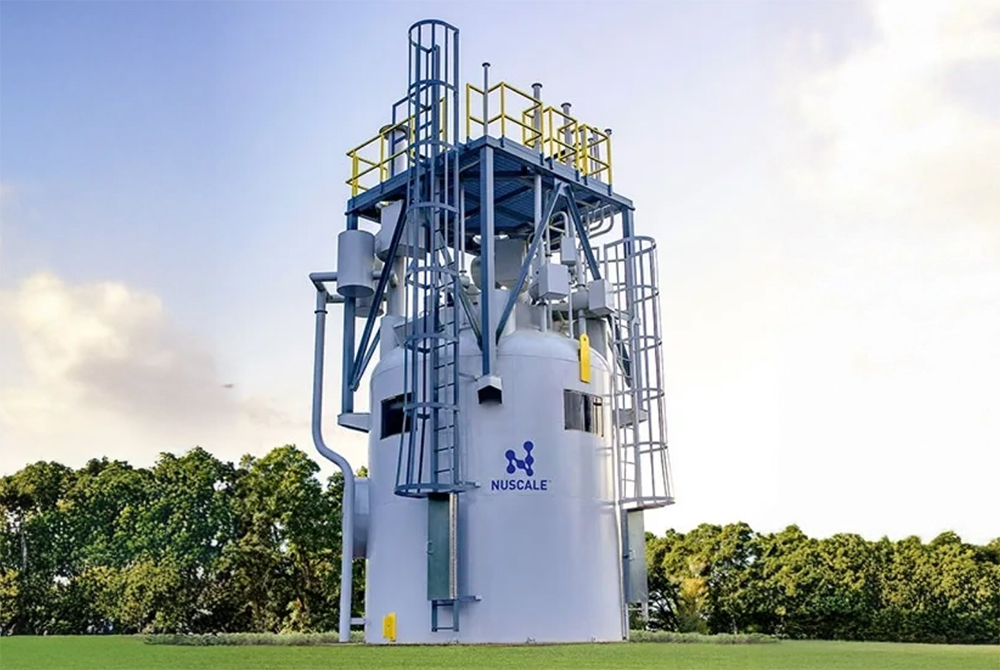
Progress in the field of small-scale civil nuclear reactors, particularly in safety and versatility, is opening the way to their possible wider use on naval combatants and to their use in the wider military domain, especially on land – an option currently being explored especially in the United States.
Nuclear power worldwide
To frame the context of potential military applications, it is worth recalling the broader picture of global nuclear energy use. According to PRIS (Power Reactor Information System), the International Atomic Energy Agency’s database, in November 2025 there were 416 nuclear power reactors in operation worldwide, for a total installed capacity of 376.3 GW(e); in 2024, 421 plants with a combined capacity of 377 GW(e) produced 2,617.3 TWh of electricity.
The United States remains the largest producer, with 94 reactors providing 96.952 GW(e) of capacity and generating some 781.9 TWh in 2024. China is rapidly catching up, with 57 reactors in operation (55.3 GW(e)) and another 29 (29.6 GW(e)) under construction, for a 2024 nuclear output of 417.5 TWh.
In Europe, France operates 57 reactors (63.0 GW(e)), which in 2024 accounted for 67.3% of national electricity generation – the highest share anywhere in the world. Other European countries also rely heavily on nuclear generation, including Slovakia (60.6% of electricity), Hungary (47.1%) and Finland (39.1%).
Globally, 63 new reactors are currently under construction, which will add a further 66.2 GW(e) of capacity once completed. Several major new plants entered service between 2024 and 2025, including Barakah-4 (PWR, 1,310 MW(e)) in the United Arab Emirates; Flamanville-3 (EPR, 1,000 MW(e)) in France; Vogtle-4 (PWR, 1,117 MW(e)) in the United States; Kakrapar-4 (PHWR, 630 MW(e)) and Rajasthan-7 (PHWR, 630 MW(e)) in India; and Fangchenggang-4 (PWR, 1,000 MW(e)) together with Zhangzhou-1 (PWR, 1,126 MW(e)) in China.
Newcomers are also entering the nuclear club. In Africa, South Africa remains the only country with operating reactors, but Egypt is building four units with a combined capacity of 4.4 GW(e). In South Asia, India is constructing six new reactors totalling 4.8 GW(e) and Bangladesh is building its first two plants (2.2 GW(e)). Elsewhere, Turkey has four reactors under construction (4.5 GW(e)), Ukraine two (2.1 GW(e)), and Russia five (5.0 GW(e)).
Beyond electricity, in 2024 nuclear reactors supplied 2,644 GWh of heat for non-power applications, mainly district heating (94.1%), with smaller shares going to industrial processes (4.1%) and seawater desalination (1.9%), primarily in Russia and China. Pressurised water reactors (PWRs) dominate the global fleet. In 2022, 302 of 411 operating units were PWRs; there were also 46 pressurised heavy-water reactors (PHWRs), 41 boiling water reactors (BWRs), two fast breeder reactors (FBRs) and 20 units of other designs. Of 58 reactors then under construction, 49 were PWRs, three PHWRs, two BWRs and four FBRs.
The complete analysis is available in the latest edition of Future Warfare Magazine (FWMag 2/2026). Log in here and read it for free!




Privacy Policy

Powered by © Mobilbyte s.a.s. Information Technology